animal flight


Bird, bat and insect wings are complex structures that are moved in stereotypical ways to generate lift and thrust.  It was once thought that animal flight could simply be understood by assuming that animals were no different from aeroplanes.  The claim that "bumblebees can't fly" is based on this assumption.  Clearly bumblebees can fly. The truth is that bats, birds, and especially insects, use unconventional aerodynamic mechanisms for generating the forces necessary for flight.  We have recently begun to visualize and understand the aerodynamic tricks that these animals use to generate lift and thrust.   This research is valuable not only in terms of our understanding of animal flight mechanics, but also for the development of new technologies, such as micro-air vehicles and improved propeller designs, which have significant engineering applications.

In this essay, we will briefly explain how animal flight is different from aeroplane flight, how animal flight is typically studied, and present some of the emerging theories and applications of this work.  The complexities of biological wings and wing motions present many technical challenges for studying flight.  Here, we use the term "flight" broadly and note that it applies to many behaviours including gliding, soaring, hovering, parachuting, manoeuvring, and even take- off and landing.  This essay is not limited to the work of our own research group, but hopefully will convince the reader why it is valuable, and necessary, to look to animals for aerodynamic insight.

Conventional aerodynamic theory

Let us begin with aeroplane wings and a basic understanding of how they generate lift.  Structurally, aeroplane wings are rounded at the leading edge, sharp at the trailing edge and are often cambered, meaning they have a slight curvature when viewed in cross section.  An aeroplane wing generates lift when the airflow becomes separated at the leading edge, and the air moves faster over the upper wing surface than along the lower surface.  This causes a pressure difference to develop between the upper and lower wing surfaces because, in accordance with Bernoulli's principle, fast-moving fluid has a lower pressure than slow-moving fluid.  It is the pressure difference above and below the wing that causes lift.

The amount lift .

ادامه نوشته

Formula 1 Aerodynamics

Formula 1 Aerodynamics

One of the most dramatic examples of an aerodynamic device is a Formula 1 racing car. It wasn't always so, in fact pre-1967 F1 cars made very little use of aerodynamics. The thinking at that time was to optimize cars for straight-line speed, i.e., minimize drag.

1967 Honda Formula 1 Car, pre-wing era1967 Honda Formula 1 Car, pre-wing era

Elsewhere, revolutionaries were thinking differently - what if we optimized cars for faster cornering speeds? As unintuitive as it sounds, cornering speed is more important to faster lap times than straight-line speed. This thinking led to the attachment of an inverted airplane wing to the rear of the car to improve downforce. Downforce equates to extra 'weight' on the tires allowing faster cornering speeds. While increasing drag and sacrificing straight-line speed, the revolution started a relentless improvement in lap times. Motor racing would never be the same again.

2007 Honda Formula 1 Car2007 Honda Formula 1 Car

Today's F1 cars are a tour-de-force in aerodynamic design, optimized to generate downforce. While F1 cars appear to be governed by aerodynamic design considerations, which they are, more importantly they are also governed by rules that attempt to keep speeds, especially cornering speeds, within safe bounds. Within these bounds let's take a tour of the modern day aerodynamics of an F1 car.

Wheels

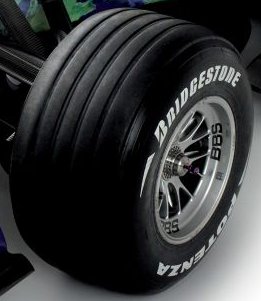
Wheel on Formula 1 CarWheel on Formula 1 Car

The defining aerodynamic feature of an F1 car is the exposed wheels. Exposed wheels are the anti-thesis of optimal aerodynamics in that they contribute significant drag and lift (the opposite of downforce). They also shed highly turbulent air in their wake, which is essentially useless as a feeder for other aerodynamic devices on the car. The distinctive Coca-Cola bottle shape of most open-wheel cars helps (in part) to avoid the turbulent wake from the front wheels disrupting the flow over and under the rest of the car.

Wings

The front and rear wings account for the majority of the overall downforce (approximately 66%) on an F1 car. Typically, multi-element airfoil sections optimized for relatively low-speed airflow (at least by aerospace standards) are employed with end plates to minimize induced drag.

Front Wing

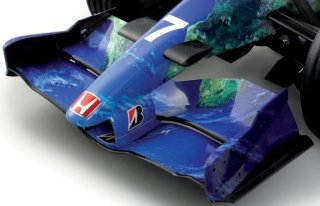
Front Wing on Formula 1 CarFront Wing on Formula 1 Car

The front wing accounts for approximately 33% of the total car downforce. The front wing end plates reduce drag and also direct air over the front wheels in an attempt to reduce drag. The front wing is shaped to direct air to the underside of the car and ultimately feed the undertray (described later). Shaping is also employed to allow air to cool the brakes and radiators. The front wing is a compromise between producing downforce and directing air to other areas of the car.

Rear Wing

Rear Wing on Formula 1 CarRear Wing on Formula 1 Car

The upper portion of the rear wing is a traditional multi-element airfoil (similar to those deployed on aircraft during landing) with end plates, and generates approximately 33% of the total car downforce. The lower portion of the rear wing, usually a single airfoil, 'pulls' or drives air from the undertray.

Undertray

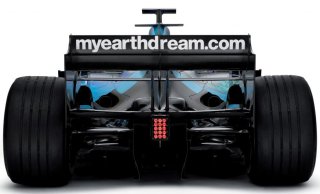
Rear of Formula 1 Car: Showing precious little of the secretive diffuserRear of Formula 1 Car: Showing precious little of the secretive diffuser

F1 rules prohibit under-car shaping or venturis, and mandate a minimum ride height enforced by a relatively low-tech wear plank attached underneath the car. However, there is still scope to shape the area directly under and behind the rear axle line. Thus, a rear diffuser combined with the airfoil in the lower portion of the rear wing is employed to produce significant downforce, approximately 25% of the total car downforce.

.

ادامه نوشته

Aerodynamics

The study of aerodynamics can be very complicated, but a basic understanding of a few aerodynamic principles are needed to adjust the Delta Dart for good flight performance. Descriptions given here have been simplified, as such might not be completely accurate.

Information Covered:


parts of the model and their function

forces on the model

flight path condition

controlling the flight path of the model


 Parts of a Delta Dart

To understand a discussion of how to trim your Delta Dart for flight, an understanding of the components of the plane and their functions is needed. 

Note: AMA Cub plan refers stabilizer as the tail and the vertical fin as the rudder.


Propeller - produces the thrust to pull the model forward.

Motor Stick - this could also called the "fuselage" on models with a full-width body. On simple models such as the Delta Dart it is a balsa stick that joins the propeller, wing, vertical fin, and stabilizer at the proper angles and distances apart.

Wing - the major lifting surface of an airplane

Stabilizer - keeps the model flying stable in the pitch axis (up and down). On the Delta Dart negative incidence pushes down on the rear the model causing the wing to fly through the air with a positive angle of attack. 

The Function of the Stabilizer


  Vertical Fin - the purpose of the vertical fin is partly to give directional control and keep the fuselage aligned with the airflow, and partly to counterbalance the side area that results from dihedral. If the fin is too small the model will show a coupled rolling, yawing flight path, known as 'Dutch Roll'. If its too big, it will overpower the dihedral and cause a spiral dive.  

It is possible to create a plane without a stabilizer but other methods of keeping the plane stable in pitch must be used. Wing covering is underneath balsa structure. The idea was submitted to Model Aviation by Dick Baxter.


Forces on a Flying Model


Drag - is the force that opposes thrust. .

ادامه نوشته

آئرودینامیک

نگاه اجمالی

آئرودینامیک بخشی از فیزیک است که به بررسی مکانیک اجسام متحرک در گازها اختصاص دارد. و در آن بویژه به نیروهای وارد بر اجسامی که در هوا در حرکتند توجه می‌شود. آزمایش نشان می‌دهد که نیروی وارد بر جسم متحرک در هوا بستگی به شکل جسم و سرعت آن دارد. یکی از این نیروها ، نیروی رو به بالایی است که آن را بالابر آئرودینامیکی می‌نامند. همچنین نیرویی هم از جهت مخالف حرکت بر جسم وارد می‌شود که آن را مقاومت یا پس کششی آئرودینامیکی می‌نامند.

مهندسی آئرودینامیک

رشته مهندسی آئرودینامیک رشته‌ای است که در آن اجسام ، با استفاده از اصول شناخته شده آئرودینامیک ، به گونه‌ای طراحی و ساخته می‌شوند که به هنگام حرکت در هوا اثرات آئردینامیکی وارد بر آنها بهینه شود. برای مثال هواپیماها ، اتومبیلها و کامیونها و انواع پرتابه‌ها را بر اساس اصول آئرودینامیک طراحی می‌کنند. در هر یک از این موارد لازم است که مقاومت آئردینامیکی وارد بر جسم به هنگام حرکت در هوا به کمترین مقدار برسد. این نوع طراحی را مقاومت - کاهی می‌نامند. زیرا این طراحی عبور هوا را در اطراف جسم تسهیل می‌کند و نیروی مقاومت وارد بر جسم را به حداقل می‌رساند.

دو مثال عملی برای آئرودینامیک

آهنگ مصرف انرژی در اتومبیل استانداردی که با سرعت حدود 65km/h حرکت می‌کند، در حدود 72km است. تقریبا 4.6w از این انرژی صرف غلبه بر مقاومت آئرودینامیکی یا مقاومت هوا می‌شود. مطالعات تجربی نشان می‌دهد که توان لازم برای اینکه اتومبیلی بتواند بر مقاومت هوا غلبه کند تقریبا به نسبت مکعب سرعت آن افزایش می‌یابد. بنابراین توان لازم برای غلبه بر مقاومت هوا برای اتومبیلی که با سرعت 130km/h در حرکت است، هشت برابر توان لازم برای اتومبیلی است که با سرعت 65km/h حرکت می‌کند.

در دوره

ادامه نوشته

آئرودینامیک


حلقهٔ باد ایجاد شده از گذر بال هواپیما، که با دود رنگی نشان داده شده‌است.

آیرودینامیک یا هواپویش، شاخه‌ای از دینامیک گازها و در حالت کلی‌تر دینامیک سیّالات است که به بررسی رفتار جریان هوا و اثر آن بر اجسام متحرک می‌پردازد. منظور از حل یک مسألهٔ آیرودینامیکی، محاسبه‌ی میدان سرعت، فشار، و دمای هوا در اطراف یک جسم است. برای این منظور باید معادله‌های حاکم بر جریان سیّال را حل کرد. سپس به کمک حل به دست آمده می‌توان نیروها و گشتاورهای وارد بر جسم را حساب کرد.

مسأله‌های آیرودینامیکی را می‌توان از جنبه‌های مختلف طبقه‌بندی کرد. یک طبقه‌بندی معمول بر اساس الگوی جریان هواست. اگر مسألهٔ آیرودینامیکی مربوط به جریان هوا در اطراف یک جسم باشد به آن آیرودینامیک بیرونی و اگر مربوط به جریان هوا داخل یک محیط بسته باشد به آن آیرودینامیک درونی گفته می‌شود. مثال آیرودینامیک بیرونی، جریان هوا در اطراف یک هواپیما و مثال آیرودینامیک درونی، جریان هوا داخل یک موتور جت یا تونل باد است.

روش دوم طبقه‌بندی بر اساس چگالی هواست. اگر چگالی جریان هوا در همه‌ی نقاط میدان سیّال ثابت باشد و با زمان تغییر نکند، جریان تراکم‌ناپذیر و در غیر این صورت تراکم‌پذیر است.

روش سوم طبقه‌بندی مسأله‌های آیرودینامیکی بر اساس عدد ماخ جریان هوا است. اگر عدد ماخ کوچک‌تر از یک باشد جریان فروصوتی، اگر نزدیک یک باشد جریان هَماصوتی، اگر بزرگ‌تر از یک و کوچک‌تر از پنج باشد جریان زبرصوتی، و اگر بزرگ‌تر از پنج باشد جریان فوق‌صوتی خوانده می‌شود.

روش چهارم طبقه‌بندی بر اساس گرانروی هواست. اگر ضریب گرانروی ناچیز فرض شود جریان غیرلزج و در غیر این صورت لزج خوانده می‌شود.